Curious whether Downtown Austin feels like a fun weekend backdrop or a place you could actually call home? If you are weighing the tradeoff between energy and ease, you are not alone. Living downtown can be exciting, convenient, and surprisingly practical, but it also comes with noise, construction, and event-driven disruption that are important to understand before you buy. Here is what daily life in Downtown Austin really looks like, and how to tell if it fits the way you want to live.
Downtown Austin feels like a real neighborhood
Downtown Austin is not just an office district or an entertainment zone. It is a dense, mixed-use neighborhood with about 13,976 residents, 14,164 residential units, 131,775 employees, 745 storefront businesses, and 15,335 hotel rooms, according to the Downtown Austin Alliance. That mix shapes everything from how busy the sidewalks feel to how often your favorite coffee spot is full on a weekday morning.
What that means for you is simple: downtown feels shared. You are living alongside residents, office workers, hotel guests, and event visitors, all in the same compact area. The result is a neighborhood that stays active for much more of the day than many other parts of Austin.
Daily life is built around convenience
One of the biggest perks of living downtown is how many decisions become easy. Restaurants, bars, coffee shops, food trucks, shops, and parks are woven into everyday life, so quick plans and spontaneous meetups feel natural. Instead of planning your day around driving, you may find yourself planning it around a short walk.
That convenience tends to create a lower-friction lifestyle. You can grab coffee, meet a friend for brunch, walk to dinner, or unwind near the lake without needing much logistics. For many buyers, that ease is the real luxury of downtown living.
Lady Bird Lake shapes the lifestyle
If there is one feature that defines downtown living, it is Lady Bird Lake. The Ann and Roy Butler Hike-and-Bike Trail runs 10 miles and sees more than 2.6 million visits each year. The city also describes it as an alternative transportation route through Austin's urban core, not just a recreational trail.
That matters because the lakefront is not separate from downtown life. It is part of the rhythm of the neighborhood. You can move from towers and city streets to trail time, skyline views, and open space in just minutes.
Parks and public art soften the density
Downtown living is urban, but it is not all concrete and glass. The Downtown Austin Alliance reports more than 150 public art installations, more than 150 acres of parkland, and 15 miles of downtown area trails. Those features help break up the density and give you room to reset without leaving the district.
If you are considering a condo, this is especially important. When private outdoor space is limited, the quality of the public realm matters more. Downtown Austin offers a version of city living where parks, trails, and art are part of the experience, not an afterthought.
Condo living is central to the downtown experience
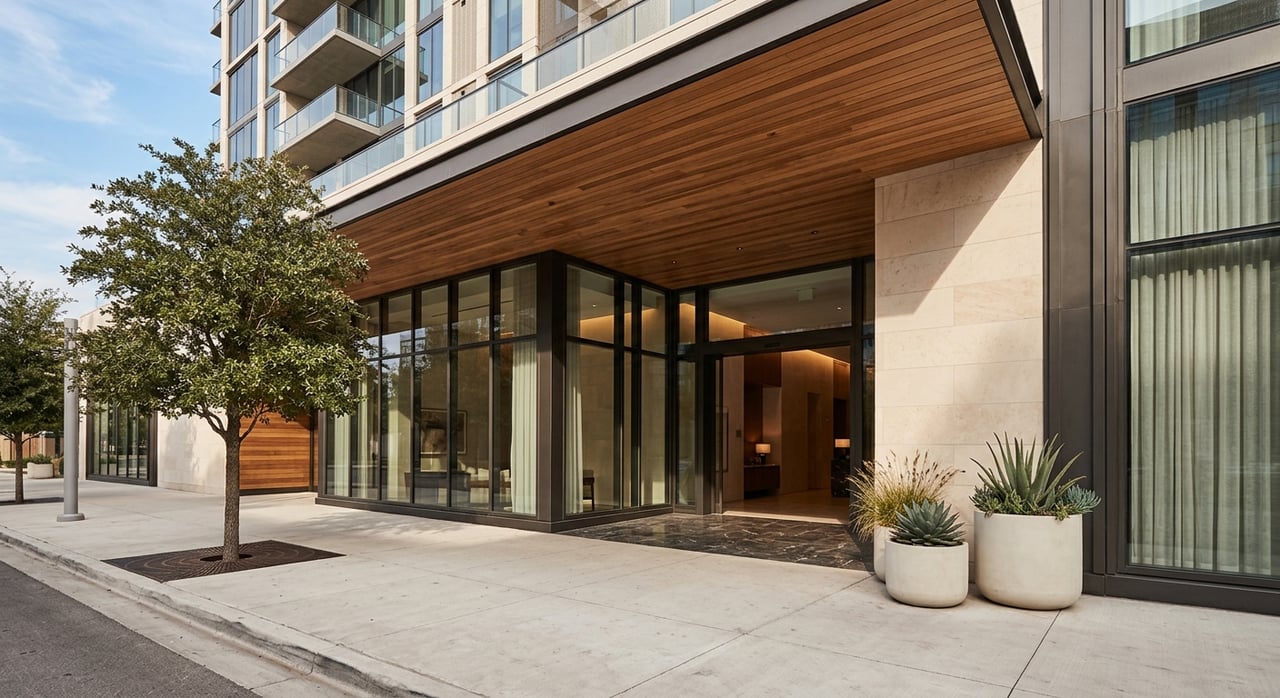
Downtown Austin feels vertical. The condo market added 550 units since 2024, a 14% increase in inventory, which reflects how much of downtown living happens in towers rather than traditional detached homes. If you are buying here, you are often choosing between buildings and lifestyles as much as between floor plans.
That makes building amenities more important than many first-time downtown buyers expect. Features like secure entry, elevators, package handling, fitness areas, pools, and shared lounges can become part of your daily routine. In a high-rise setting, the building itself often functions like an extension of your home.
Why amenities matter more downtown
In a suburban setting, you may care most about lot size, storage, or a private yard. Downtown shifts that equation. Since homes are stacked vertically and the neighborhood is dense, convenience inside the building and walkability outside the building carry much more weight.
This is why two condos with similar square footage can feel very different in practice. The right building can make daily life feel smooth and comfortable. The wrong one can make even a great floor plan feel less functional over time.
Getting around without a car is realistic
Downtown Austin is one of the city's main transportation hubs, and it offers more ways to move around than many other Austin neighborhoods. According to the Downtown Austin Alliance, residents and visitors can get into, around, and out of downtown by bus, rail, rideshare, biking, and parking. That gives you flexibility if you want to reduce how often you drive.
CapMetro adds to that convenience. Rapid buses run every 10 to 15 minutes, and the broader high-frequency network runs every 15 to 30 minutes. The Red Line connects downtown and Leander, and airport Route 20 runs every 15 minutes, seven days a week between Austin-Bergstrom International Airport and downtown.
Walking is part of the design
Downtown's walkability is not accidental. Austin's Great Streets Program prioritizes pedestrians first, then transit, then bicycles, and lastly automobiles. The program adds shade trees, benches, bike racks, public art, and sidewalk improvements to make downtown streets feel more usable and comfortable.
Those improvements have been implemented across roughly 211 block faces. If you live near Congress Avenue, the lakefront, or central restaurant and entertainment areas, many of your regular trips may be easy to do on foot. That can change how your whole week feels.
But car ownership can still matter
Downtown is walkable and transit-friendly, but it is not completely car-free by default. The Downtown Austin Alliance still highlights driving, parking, and rideshare alongside bus, rail, and biking options. For some errands, work routines, or trips outside central Austin, having a car may still be useful.
This is one of the most important mindset shifts for buyers. Downtown can support a car-light lifestyle, but whether it works for you depends on your actual habits. It is less about whether a car is possible and more about how often you want to rely on one.
The streets are still evolving
Downtown Austin is actively changing. The Downtown Austin Alliance reports 2.94 million square feet under construction and 8.22 million square feet of planned space. That means the neighborhood you see today is not fully finished, and visible change is part of the lived experience.
You should expect construction to be part of downtown life for the near future. That can mean fencing, lane shifts, detours, and occasional inconvenience. Over time, many of those projects may improve public space and add new services, but in the short term they can affect your day-to-day routine.
Congress Avenue is a good example
Congress Avenue is described by the city as the central spine of downtown and the connection between Lady Bird Lake and the Texas State Capitol. It is also being re-envisioned through a human-centered design process. That tells you something important about downtown: even its most iconic spaces are still being refined.
For residents, that means the main street experience is not static. It is improving, but it may also feel transitional in places. If you are drawn to downtown for its urban energy, this ongoing reinvestment may be a positive. If you want a finished, predictable environment, it is worth weighing carefully.
Big events are part of the package
Downtown Austin does not quiet down the way many neighborhoods do. Major events are part of the rhythm of the area, and they can affect traffic, parking, and overall street activity. If you live here, that is not an occasional surprise. It is part of the deal.
During SXSW, street closures, higher traffic volume, and more expensive parking can reshape how you get around. The 2026 SXSW season ran March 12 through March 18 across downtown Austin. Even if you enjoy the energy, it is helpful to know that event weeks can require more patience and flexibility.
Fall can get busier too
ACL Fest brings another wave of regional activity. The City of Austin says the festival is held annually at Zilker Park, and ACL's 2026 dates are October 2 through 4 and October 9 through 11. The festival's own community impact page says it draws 75,000 people per day.
For a downtown resident, that usually means busier fall weekends, more rideshare friction, and extra traffic around central Austin. Even when the event is not directly outside your building, it can still shape the feel of the area.
Downtown has visible support systems
A city center works differently from a quiet residential pocket, and Downtown Austin has a more visible management layer than many buyers expect. The Downtown Austin Alliance says more than 60% of its annual budget goes toward keeping downtown clean, safe, and welcoming. Its ambassadors work from 6 a.m. to 11 p.m., and its safety team adds early patrols and entertainment-district coverage from 5 p.m. to 3 a.m. on Thursday through Sunday nights.
This can make downtown feel more supported and maintained than some outsiders assume. At the same time, it reflects the realities of a dense urban environment with late-night activity and heavy foot traffic. It is best to think of downtown as actively managed, not passive.
Who tends to love living downtown
Downtown Austin is often a strong fit if you want energy, walkability, restaurants, lake access, and easy access to transit and events. It can work especially well if you value convenience and do not need a large private outdoor space. Buyers who enjoy a more spontaneous, urban routine often find downtown rewarding.
It is usually a weaker fit if you want a private yard, a consistently quiet street, or a lifestyle built around driving everywhere with minimal friction. That does not make downtown better or worse than other Austin neighborhoods. It just makes it more specific.
How to decide if downtown fits you
The best way to evaluate Downtown Austin is to think beyond the view from a high-rise balcony. Ask yourself how you want your weekdays to feel, how often you want to walk versus drive, and whether access to restaurants, trails, and events matters more to you than privacy and quiet. Lifestyle fit matters here as much as square footage.
If you are buying downtown, the right choice is often about matching your routine to the right building, block, and pocket of the neighborhood. That is where local insight becomes especially valuable. A downtown move works best when you understand not just the property, but the pace and personality of the area around it.
If you are thinking about a move in Central Austin and want help weighing neighborhood fit, building lifestyle, and long-term value, Local Color Realty Group offers the kind of owner-led, neighborhood-first guidance that helps you make a smart, confident decision.
FAQs
What is daily life like in Downtown Austin?
- Daily life in Downtown Austin often revolves around walkability, easy dining options, coffee shops, parks, trail access, and spontaneous plans, with a steady mix of residents, workers, and visitors shaping the energy of the area.
Is Downtown Austin a walkable neighborhood?
- Yes. Downtown Austin is designed to support walking, with pedestrian-focused street improvements, access to trails, and many daily destinations close together.
Can you live in Downtown Austin without a car?
- In many cases, yes. Downtown offers bus, rail, biking, rideshare, and walkable access to many destinations, though some residents still prefer having a car for certain routines.
Are condos the main housing option in Downtown Austin?
- Yes. Downtown living is largely condo-based and high-rise oriented, so buyers often compare buildings, amenities, and services as much as the homes themselves.
Is Downtown Austin noisy or busy?
- It can be. Downtown stays more active than many other neighborhoods, especially during major events, weekends, and ongoing construction periods.
Does Downtown Austin have access to parks and trails?
- Yes. Downtown includes access to Lady Bird Lake, the 10-mile Ann and Roy Butler Hike-and-Bike Trail, more than 150 acres of parkland, and 15 miles of downtown area trails.
Who is Downtown Austin best suited for?
- Downtown Austin is usually best for buyers who want an active, urban lifestyle with walkability, dining, lake access, and proximity to events and transit.