Barton Springs Road marks the neighborhood's northern edge, the one line on the map where Barton Hills stops and the noise of Zilker Park begins. It has always worked that way by design. When the subdivision platted its first sections in the 1950s, it marketed itself as the world's largest air-conditioned subdivision, a place built to keep the heat, and by extension the crowd, on the other side of that line. For seventy years, the arrangement held. You could live three blocks from one of the busiest parks in Texas and never feel like you did.
This year that line got porous. Not the whole neighborhood, not overnight, but at three specific points along its edge, and the shift is worth understanding if you already call this place home, because it changes how you'll actually use the next few months here.
The Trail Finally Loops All the Way Around
For as long as most residents can remember, the Ann and Roy Butler Hike-and-Bike Trail around Lady Bird Lake had a gap. Cyclists and runners coming off the Barton Springs side had to break onto surface streets to close the loop, a detour that turned a scenic ride into a traffic negotiation. On February 7, 2026, the city cut the ribbon on the Wishbone Bridge and Unity Underpass, the trail's final missing link and a three-way, traffic-free crossing over the lake.
That is not a downtown improvement that happens to show up on a map near Barton Hills. It is a direct upgrade to the loop residents here already use to get to the springs, to downtown, or just around the water on a Saturday morning. The detour is gone. The trail that used to dump you onto a street now just keeps going.
A New Table Landed a Block from the Property Line
Barton Hills itself has never had much of a commercial strip. The neighborhood is built almost entirely of houses, which means residents have always crossed the line into Zilker or South Lamar to eat. That crossing got easier, and more interesting, in late February 2026, when Oria opened at 1530 Barton Springs Road, right at the edge of the park. The concept centers on charcoal and wood-fired cooking with a menu pulling from Southern European and Eastern Mediterranean traditions, a genre Austin hasn't had much of on that particular stretch of road.
The same news cycle carried a smaller, sadder story: Little Mexico, a South Austin fixture for nearly 40 years, closed its doors. Put the two together and you get a more honest picture than either headline alone. The dining options within a five-minute walk of Barton Hills didn't just add one restaurant. They turned over, the way every edge of a growing city does, with something new landing right as something long-standing exits.
What Changed at the Edge, Not in the Middle
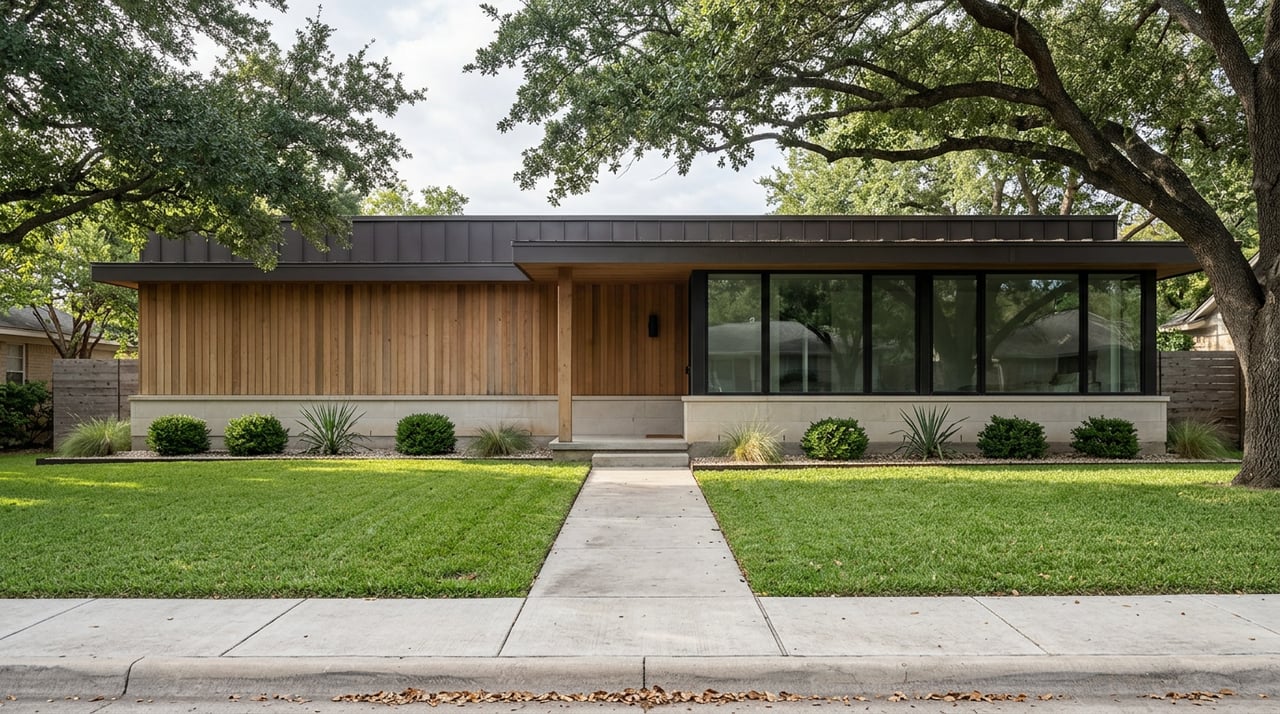
None of this touched the interior of the neighborhood. The ranch houses on Ariole Way and the mid-century Stenger-designed homes near Arthur Street look exactly like they did last August. The change is entirely at the boundary, which is easiest to see side by side.
| At the Barton Hills / Zilker edge | Before 2026 | Now |
|---|---|---|
| Butler Trail loop | Gap forced a street detour near Lady Bird Lake | Continuous loop via Wishbone Bridge (opened Feb 7, 2026) |
| Dining within walking distance | Little Mexico, in operation for nearly 40 years | Little Mexico closed; Oria opened late Feb. 2026 at 1530 Barton Springs Rd |
| Barton Springs Pool admission | Extended free-entry window | Fees resumed March 21, 2026 after skimmer bypass project |
| Upper Greenbelt swimming (Twin Falls, Sculpture Falls, Gus Fruh) | Flow-dependent, always | Reading near 0 cfs at the Loop 360 gauge as of mid-August 2026 |
Read across that table and the pattern is clear. Every line item is something that happened to the park and the road that borders the neighborhood, not something that happened inside it. Barton Hills didn't get louder. Its front door did.
The Cost of Being Close: Parking Signs on Your Own Street
Proximity cuts both ways, and the Barton Hills Neighborhood Association's own announcements make that plain. Blues on the Green, the long-running free concert series at Zilker Park, is a summer fixture close enough to reach the neighborhood's own streets. Ahead of concert dates, the BHNA has warned residents that signs go up within the neighborhood to discourage event parking, with the city ticketing and towing violators during event hours.
That is the trade the last few points in this piece don't show. A finished trail and a new restaurant are pure upside for a resident. A free concert with no parking of its own is the same closeness working against you, on the same streets, during the same evenings. Living at the edge of a 351-acre park with a summer concert series means occasionally treating your own driveway like contested territory a few nights a year.
The Creek Went Quiet, the Park Didn't
Barton Hills has one natural feature that belongs to the neighborhood more than to the park next door: Gus Fruh, a Barton Creek access point reached directly off Barton Hills Drive, inside the neighborhood's own streets. It is the one part of this story that isn't about Zilker's edge encroaching inward. It's about the reverse, a neighborhood asset residents have always been able to reach without crossing the line at all.
Right now it isn't much of an asset. The U.S. Geological Survey gauge at Barton Creek near Loop 360 posted a daily mean of 0.0 cubic feet per second on August 15, 2026, which in plain terms means the creek bed in that reach is effectively dry. Barton Creek is a losing stream through this stretch of the Greenbelt: in dry conditions, its water sinks straight into the porous limestone of the Edwards Aquifer recharge zone rather than continuing downstream, which is why Gus Fruh and the popular pools further upstream can read dry while a gauge miles away still shows flow.
Barton Springs Pool doesn't have that problem. It's spring-fed, not creek-fed, so it holds water regardless of rainfall. What changed there is money, not water. The pool closed February 23 through March 13, 2026 for the Barton Springs Skimmer Bypass Project, which removed a failing 1940s bypass structure under a federal permit protecting the Barton Springs salamander. When it reopened on March 21, the extended stretch of free admission that had been in place ended, and the standard city rate resumed: $5 for Austin residents, $9 for non-residents, per adult, with discounts for kids and seniors. A resident season pass runs $190 a year and covers every city pool, a number that pays for itself in roughly 38 visits, a threshold a weekly swimmer clears well before summer is over.
Put the creek and the pool together and the picture sharpens. The one water feature that belonged entirely to the neighborhood is unreliable this month. The one that belongs to the park next door isn't, but it now costs something it didn't used to. Either way, residents are leaning on the park's side of the line more than a typical August, for water, for dinner, and for the trail that finally loops all the way around.
The Line Isn't Gone, It's Just Thinner
None of this rezones Barton Hills or changes what the neighborhood is. The houses on Ariole Way aren't any closer to Barton Springs Road than they were last year. What changed is how much of daily life now happens right at that boundary instead of stopping short of it, and how much that boundary occasionally pushes back, in the form of a parking sign or a dry creek bed. A neighborhood built to seal itself off from a park is spending more time at that park's front door than it has in years, and the trade-offs that come with that are worth knowing before August turns into September.
If you're a longtime resident weighing whether now is the right moment to make a move within the area, or you're watching Barton Hills from outside and wondering whether this kind of edge activity holds up, that's exactly the sort of on-the-ground read Local Color Realty Group tracks block by block. Work With Us.